Walk-in Cinema
Tirailleurs: Trials and Tribulations
23.3.–8.6.2026
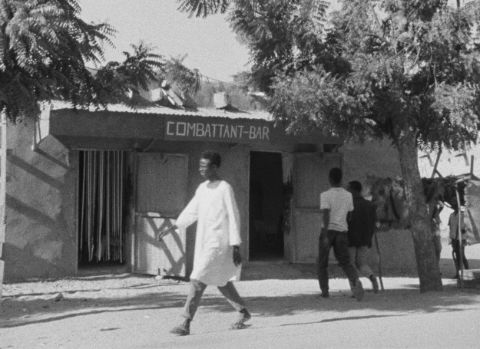
Still from Cabascabo (1968/69). Courtesy of Argos Films
The film programme transforms the Safi Faye Hall into a temporary Walk-in Cinema. The selected historical and contemporary films show fictional and documentary perspectives on the history of the Tirailleurs and other colonized soldiers—deliberately countering prevailing narratives.
The focus is on voices and images that have been systematically marginalized: people who fought in wars that were not their own, whose stories have been fragmented, suppressed, or never recorded. The films reject heroic narratives and instead focus on experiences of coercion, exploitation, conflicts of loyalty, and structural racism—as well as acts of resistance, self-assertion, and the defence of one’s own memories.
The works negotiate different facets of colonial violence and its aftermath: Emitaï and Indigènes deal with resistance to colonial rule; Tasuma and Cabascabo show the disappointment and isolation of those who return. J’ai tant aimé and Cornwallis Cloth make female perspectives visible, while Wings of Takasago Giyutai is dedicated to commemorating the ancestors of Indigenous units from Taiwan. Indochine. Sur les traces d’une mère explores the search for family, while Baroud d’honneur eveals the ongoing struggle for rights, recognition, and compensation.
Together, the films understand cinema as a place of counter-memory. They decentralize hegemonic historiography and open up a space in which the past is not closed, but can be read as politically effective in the present—in a world that continues to be marked by war and violence.
Info: Due to the events schedule of the closing weekend, the Walk-In Cinema programme now concludes early, with the last screening taking place on 8 June 2026.