Binta Diaw
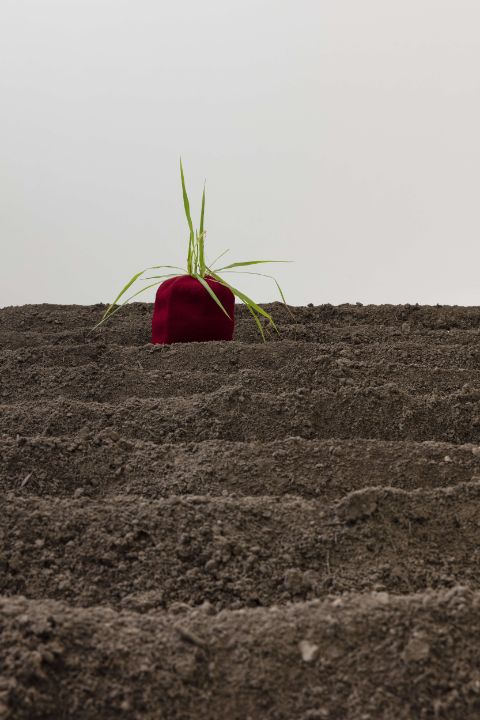
Binta Diaw, 1. 12. 44., Les tirés ailleurs, exhibition view, ChertLüdde/Bungalow, Berlin, 2022© VG Bild-Kunst, Bonn 2026, courtesy of the artist and ChertLüdde
Binta Diaw’s practice draws from intersectional methodologies that explore social phenomena such as migration, identity, and the Black body in a western context. She uses natural and everyday materials such as soil, chalk, rope, and synthetic hair. Her work often foregrounds the tension between visibility and erasure, tracing how Black presence is precarious within institutional and architectural spaces. The selection presented in the exhibition is titled 1.12.44-1 - Édition 1/3 (2021), an installation that consists of soil, plants, and a Senegalese hat. The date in the title references the Camp de Thiaroye massacre of 1 December 1944, when French colonial troops fired on Senegalese soldiers at a camp near Dakar who were protesting unpaid wages and poor conditions after fighting for France during the Second World War. The installation extends beyond the Mrinalini Mukherjee Hall, with part of it stretching outside, connecting to the surrounding life in the Forough Farrokhzad Garden. With the vertical typology of the title, Diaw references the many unknown burial grounds of the massacre’s victims and alludes to a number column, reminiscent of the continuous and contested calculation of the total number of victims from that day.
Work in the exhibition: 1.12.44-1 - Édition 1/3 (2021), soil, sound, corn stalks, hat typically worn by the Tirailleurs Sénégalais. Courtesy of the artist