Cheikh Lô
Concert
Fri., 20.3.2026
21:00
Miriam Makeba Auditorium
Free entry
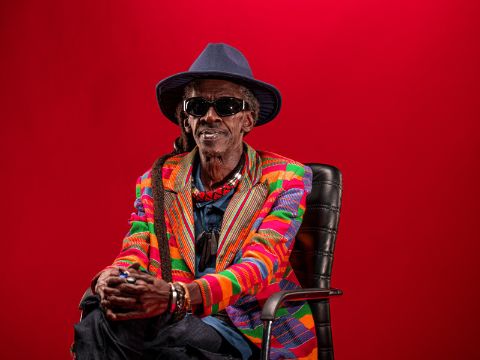
Cheikh Lô. Photo: Promo
Cheikh Lô is a singer, musician, and spiritual ambassador traversing the boundaries of genres and cultures, combining various styles and influences while remaining unmistakably himself. He enjoys an excellent reputation as a guitarist, percussionist, and drummer, but became famed around the world as a singer/songwriter through his warm, powerful—and always somewhat hoarse—voice.
Born in 1955 to Senegalese parents in Bobo-Dioulasso in southwestern Burkina Faso, Cheikh Lô was drawn to music at an early age. Congolese rumba, which was enormously popular in West Africa in the 1970s, and Latin American music became formative influences. With his first band, the Orchestra Volta Jazz, he played Congolese pop, later travelling to Dakar in the early 1980s, where he immersed himself in the lively club scene there and was hired as a drummer and singer for various mbalax bands at the Hotel Savana. He then lived in Paris for a period, working as a much sought after studio musician before returning to Dakar in 1990. He then released his first music cassette and finally began a close collaboration with Youssou N'Dour, who also produced his debut album Ne La Thiass, a mix of mbalax, reggae and Congolese soukous, carried by Cheikh Lô's unique voice. The album was a hit, bringing almost immediate fame overnight. Further albums followed and with them an internationally successful career. In 2010, the much-acclaimed album Jamm was released, a mixture of West African and Cuban music, funk, and flamenco.
Cheikh Lô dedicates all his musical work to the values of the Baye Fall movement, part of the Muslim brotherhood of the Mouride. Founded at the end of the nineteenth century by Cheikh Ahmadou Bamba Mbacké in opposition to French colonial rule, Mouridism is committed to charitable work, modesty, and lifelong spiritual learning in West Africa. Bamba’s student Cheikh Ibra Fall created the Baye Fall movement, which is characterized by a striving for peace, tolerance, and social justice.
Cheikh Lô’s latest album Maame (2025), the first after a ten-year creative break, consists mainly of Baye Fall religious songs, combined with mbalax, Afro-Cuban influences, reggae, and soul. The songs are sung in Wolof, Dioula, Malinke, French, and English. Maame is a tribute to the two founders of the religion as well as to Cheikh Lô’s own teacher Maame Massama Ndiaye. The album is both a return to the artist’s spiritual roots and a reinvention—a powerful statement as a cultural ambassador and moral voice, for which he is revered throughout Africa.